Driving around Orlando, Florida, is a unique experience. Between the sun-soaked afternoons, the iconic palm trees, and the energetic pulse of Central Florida, our daily commutes are rarely boring. However, living in the Sunshine State also comes with a rigorous weather reality check. When summer hits full swing, fierce afternoon thunderstorms can turn major thoroughfares into temporary aquatic runways within minutes.
While most drivers know to slow down to avoid hydroplaning, fewer realize what is happening beneath their tires. Beneath those sheets of fast-moving stormwater lie hidden road hazards that can wreak absolute havoc on your vehicle’s undercarriage. If you have ever felt a bone-jarring thud after driving through a flooded intersection, your car’s suspension system bore the brunt of that impact.
Understanding how flash floods and potholes conspire against your vehicle, and knowing when to consult a trusted mechanic orlando fl, is the key to avoiding costly breakdowns and ensuring your peace of mind on the road.
Why Orlando’s Extreme Weather Tests Your Car’s Foundation
Your vehicle’s suspension is an intricate network of springs, shock absorbers, struts, control arms, and bushings designed to do one primary job: keep your tires firmly planted on the road while isolating your cabin from bumps and vibrations. It is literally the lifeblood of your ride’s stability, handling, and braking safety.
Unfortunately, Orlando’s specific environmental conditions place extraordinary stress on these components:
- Intense Thermal Cycling & Humidity: The combination of scorching Florida heat and heavy tropical downpours causes rubber bushings and seals to dry out, crack, and degrade prematurely.
- Aggressive Asphalt Expansion: When intense rain rapidly cools hot pavement, asphalt weakens, loosening aggregate materials and creating ideal conditions for potholes to form overnight.
- Constant Water Exposure: Standing water on roads constantly splashes against underbody components, accelerating rust on metal links and washing away essential lubrication from joints.
When these environmental factors combine with the physical trauma of hitting a deep, water-filled crater, your suspension components can easily bend, snap, or lose their calibration.
The Hidden Danger: Why Floodwater Makes Potholes Twice as Dangerous
Normally, when you spot a pothole in your rearview mirror or ahead in your lane, your instinct is to steer around it or gently brake before impact. But when a sudden cloudburst drops inches of rain in twenty minutes, street drainage systems get overwhelmed. Suddenly, a familiar commute transforms into a murky lake where every puddle could be a shallow puddle or a tire-shredding crater.
Water acts as an optical illusion. It flattens the appearance of the road surface, masking the true depth of a hole. When you drive through standing water at normal speeds, your tires drop into these unseen holes without warning.
Without the opportunity to brace or brake properly, the full kinetic energy of your vehicle transfers directly into your wheels, steering rack, and suspension struts. This sudden shock frequently results in:
- Bent or cracked wheel rims
- Premature tire sidewall bubbles or catastrophic blowouts
- Severely knocked-out wheel alignment
- Fractured control arms or ruptured shock absorbers
Tell-Tale Signs Your Suspension Has Taken a Hit
Because suspension damage often develops gradually or hides beneath the vehicle, it is easy to ignore subtle changes in how your car drives until a minor issue becomes a major safety hazard. Staying proactive means recognizing the warning signs early.
If you have recently driven through heavy storm water or felt a heavy impact, pay close attention to how your car behaves:
1. The Steering Wheel is Off-Center
If you are driving straight on a flat Orlando highway like I-4 or Colonial Drive, but your steering wheel is tilted to the left or right, your wheel alignment has likely been knocked out of whack by a severe impact.
2. Excessive Pulling or Drifting
Does your car constantly feel like it wants to drift toward the shoulder? A sudden jolt can bend tie rods or control arms, altering your vehicle’s geometry and causing uneven tire wear.
3. A Bouncy, Uncontrolled Ride
Shocks and struts are engineered to dampen bounce. If your car continues to bob up and down multiple times after going over a speed bump or dips aggressively when you brake, your dampening system is compromised.
4. Unfamiliar Clunks, Squeaks, or Groans
Suspension parts rely on tight joints and rubber insulators. If you hear loud metallic clunks, clatters, or groaning noises when turning corners or rolling over minor bumps, metal is likely grinding against metal.

What to Do Immediately After Hitting a Pothole in a Storm
Taking the right steps immediately after a severe road impact can save you hundreds of dollars in secondary repairs and keep you safe:
- Pull Over Safely: If your car is vibrating heavily, pulling violently, or making alarming scraping noises, find a safe, dry location away from traffic to inspect the vehicle.
- Perform a Visual Walk-Around: Check your tires for bulges, cuts, or rapid deflation. Look at your wheel rims for dents and peek beneath the bumper for any plastic shields or suspension arms hanging dangerously low.
- Avoid High Speeds: If you suspect damage, avoid getting back on high-speed expressways. Drive slowly and cautiously to a professional car repair orlando facility, or arrange for a tow if steering control feels compromised.
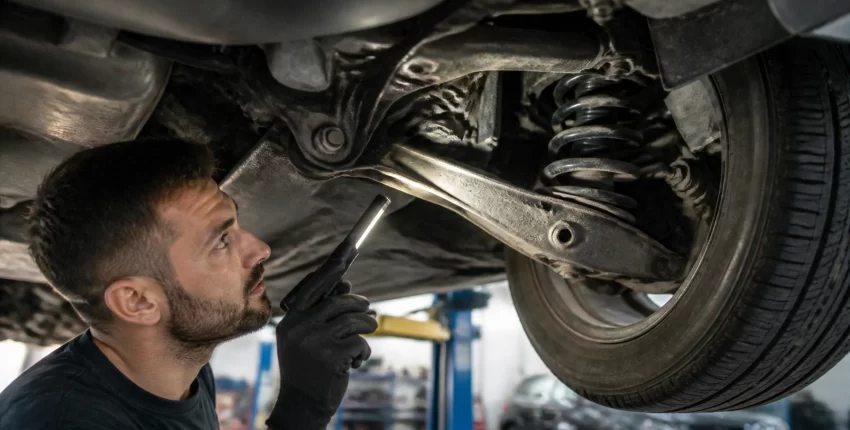
- Schedule a Comprehensive Inspection: A professional lift inspection allows technicians to examine every bushing, ball joint, and strut for microscopic stress fractures that aren’t visible from ground level. Pairing this with a precise wheel alignment restores factory handling and protects your tires from premature baldness.
Securing Your Peace of Mind on Orlando Roads
You cannot control when an afternoon squall will roll across Orange County, nor can you personally patch every street in the city. However, you can control how you care for your vehicle in the aftermath. By adopting a preventative mindset and addressing suspension jolts immediately, you protect your investment, extend the lifespan of your tires, and ensure your daily drive remains smooth and secure.
If recent downpours and hidden road craters have left your vehicle feeling less than stable, don’t wait for a small vibration to turn into a roadside emergency. Reach out to our experienced team for expert diagnostics and reliable auto repair orlando fl services designed to get you back on the road safely and comfortably.